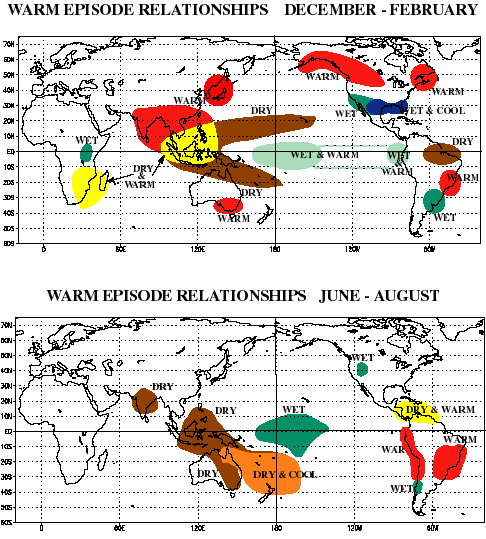
La Niña Phenomenon

La Niña Phenomenon

The cool phase of ENSO and its influence on seasonal rainfall and storms.

La Niña is the cool phase of ENSO, usually linked to stronger Pacific trade winds and shifted rainfall patterns.

Planning notes

  • Effects vary by region and season.
  • It can alter tropical cyclone formation zones.
  • Local forecasts remain necessary for day-to-day decisions.

出典: Wikimedia Commons ENSO regional impacts map · 更新 2026-06-15

🌀 Typhoon Naming Rules

How tropical cyclones are named, retired, and communicated across regions.

🌪️ Tropical Cyclone Classification

A practical guide to tropical cyclone wind scales and impact categories.

📚 Major Typhoon Archive

How major typhoon records are reviewed and compared across seasons.

🌡️ El Niño Phenomenon

How Pacific sea-surface warming changes rainfall, monsoon, and seasonal weather risks.

🔁 ENSO Cycle Explained

A clear explanation of El Niño, La Niña, neutral phases, and global teleconnections.

📈 Climate Change Data 2026

A practical weather-data lens on warming, heavy rainfall, drought, and urban risk.

🔥 Global Warming & Greenhouse Effect

The science behind greenhouse gases, warming trends, and weather extremes.

🌐 Glacier Melt & Sea Level Rise

How ice loss and ocean warming raise coastal weather and flood risks.

🌱 Carbon Neutrality Goals

How carbon-neutral plans connect emissions, energy systems, and climate risk.

⚠️ Extreme Weather Events Archive

A monthly framework for reviewing global heat, flood, storm, drought, and cold events.

🌡️ Heat Waves & Cold Waves Science

Why prolonged heat and cold happen, and how they affect health and infrastructure.

🌪️ Tornado & Thunderstorm Science

How instability, wind shear, and supercells create severe convective weather.

🌾 24 Solar Terms & Meteorology

How traditional seasonal markers relate to modern weather and climate observation.

🏙️ Urban Heat Island Effect

Why cities stay warmer and what reduces heat stress at street level.

🛰️ Weather Forecast Technology

From surface observations and satellites to numerical models and AI-assisted forecasts.